
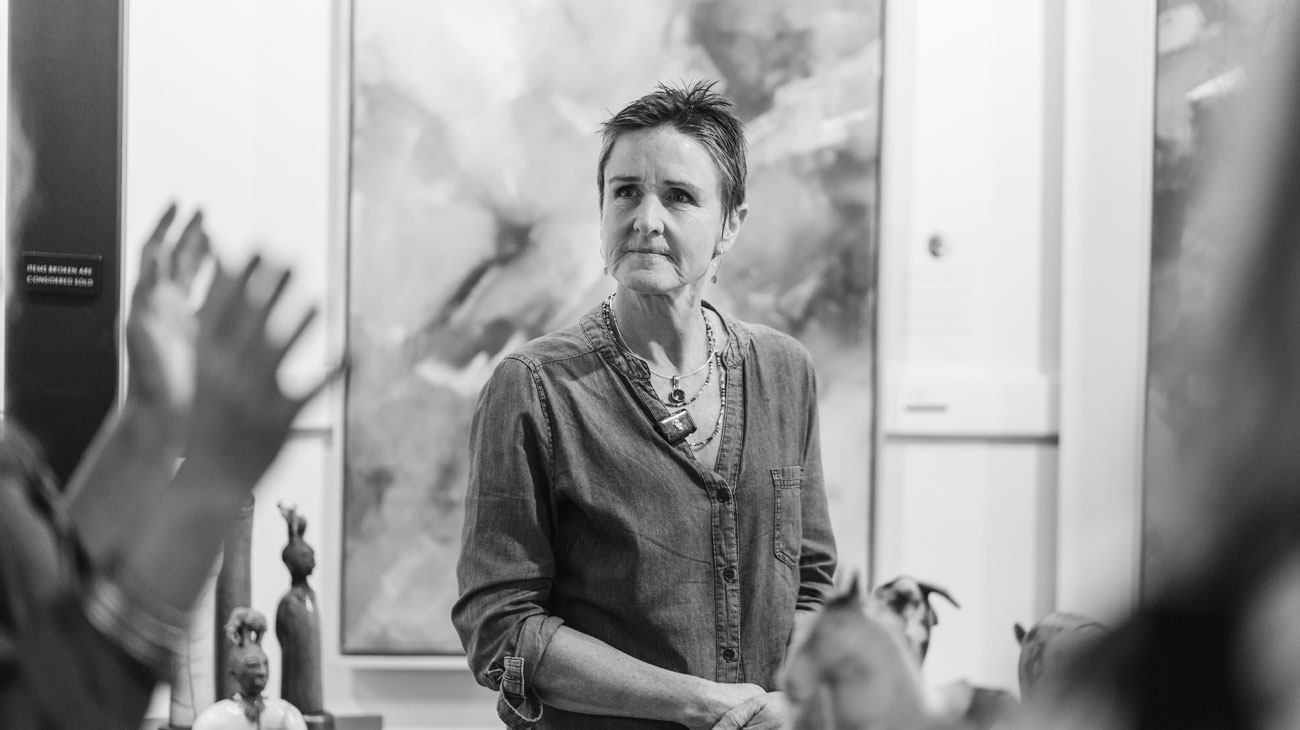
For Jane Digby, Periphery is the threshold, that fleeting pause between past and future. In conversation, she described how her oil paintings explore this liminal spaces, balancing chaos with calm, memory with hope.
“For me, Periphery is the threshold of space and time. It’s about the past, the future, and that fleeting moment of now when the world just pauses.”
Jane Digby, a fine artist and oil painter, describes herself not as fixed in one medium but as a creative being on an ever-evolving journey. “Some of it is four steps backwards, two forward, one back, four forward — but we’re on a journey of discovery. I love using the medium of oil painting to express my journey of life and creativity. There’s always that link between life and my work, and that’s why my life is inspired by my artwork and my artwork inspired by life.”
For Jane, Periphery reflects this sense of presence — a focus on the now, while always drawing on memory and looking with hope into the future. “That moment is so finite that you’ve got to take a deep breath and just absorb it, otherwise life just runs by you. Being a mom of two girls, you feel in stereo how much life passes you by because they grow up so quickly.”
Her creative process is responsive and intuitive. She begins by activating the canvas with incidental marks, without prescribing what the outcome will be. “I had a vague idea that I was going to paint a series of benches, but suddenly the painting started telling me: no, you don’t need a bench, you can sit under a tree or on the edge of the tide. I really let my paintings influence my future mark-making.”
Benches have become a recurring motif in Jane’s paintings. Rooted in a poignant childhood memory during apartheid, when she, her brother and nanny were seated on a “whites only” bench and their nanny was taken away by the police. Benches for Jane symbolize history, memory, and human connection. “They hold space — for strangers, for loved ones, for conversations across age, race, and culture. Each bench has its own story. That memory reminds us how far South Africa has come, and how much hope there is for the future, despite the challenges.”
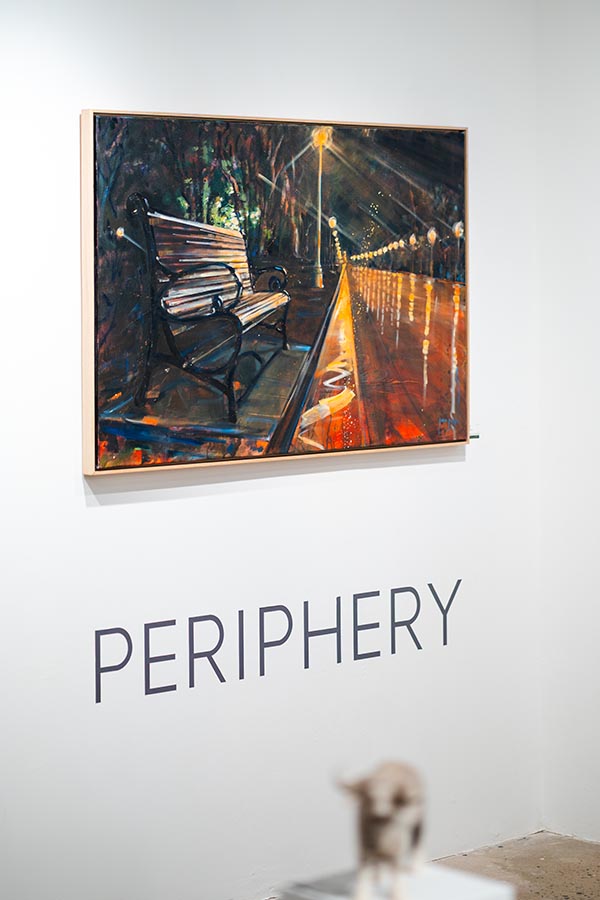
Themes of contrast run strongly through her work — light and dark, bold and soft, chaos and calm, transparent and opaque. “These contrasts give depth to my artwork and create curiosity. Sometimes I look at my painting the next day and think, ‘Wow! Did I paint that?’ I want viewers to experience that same dialogue — to live with my work and keep discovering something new in it.”
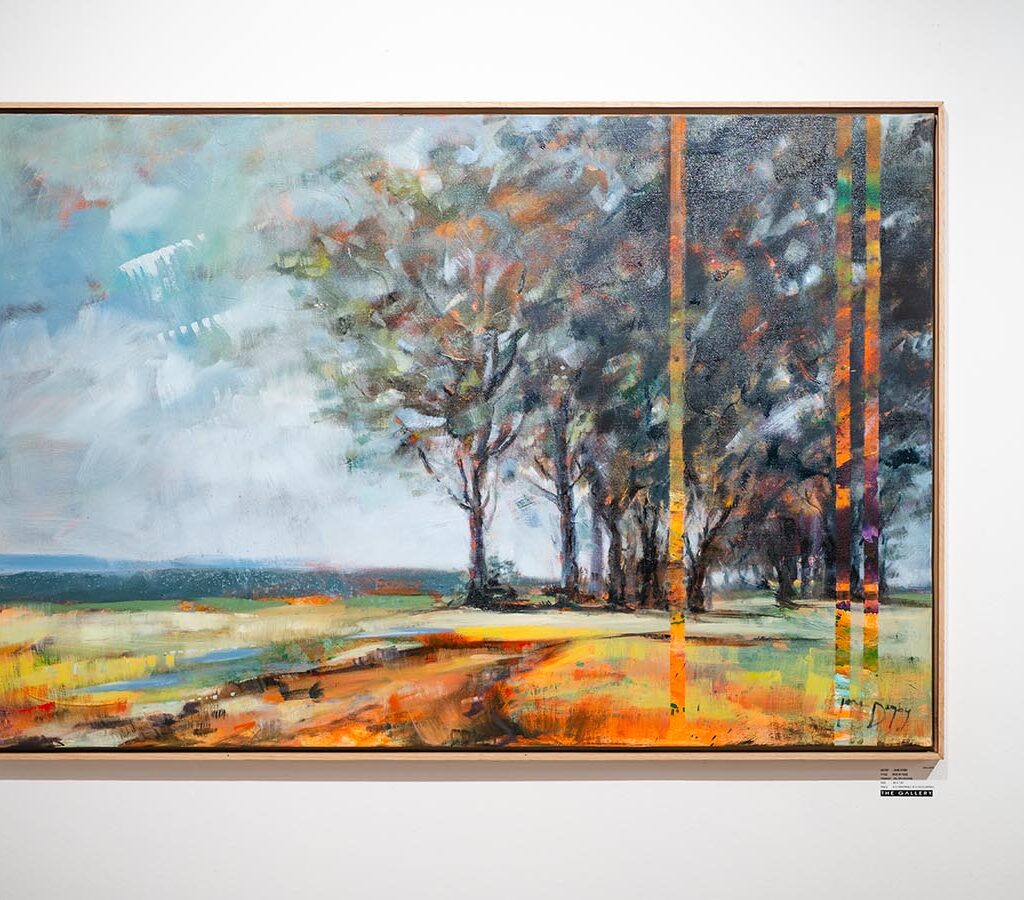
More recently, Jane has introduced linear stripes into her work. What began as parallel lines like a “pause button” have grown into a powerful visual device. “They symbolize the now — that fleeting moment in time — but also play with contrasts of traditional and contemporary. They shift perspective, like looking through a window or into a different time zone. They create curiosity, tension, and a kind of edginess that keeps me engaged with the work.”
For Jane, painting is both meditative and exhilarating, always balancing presence and discovery. “It’s an addiction in a good way. I need that space, that dialogue with the canvas. It creates wonder, playfulness, and tension — and that keeps me wanting to paint the next one, and the next one, because I never know what’s going to unfold.”