
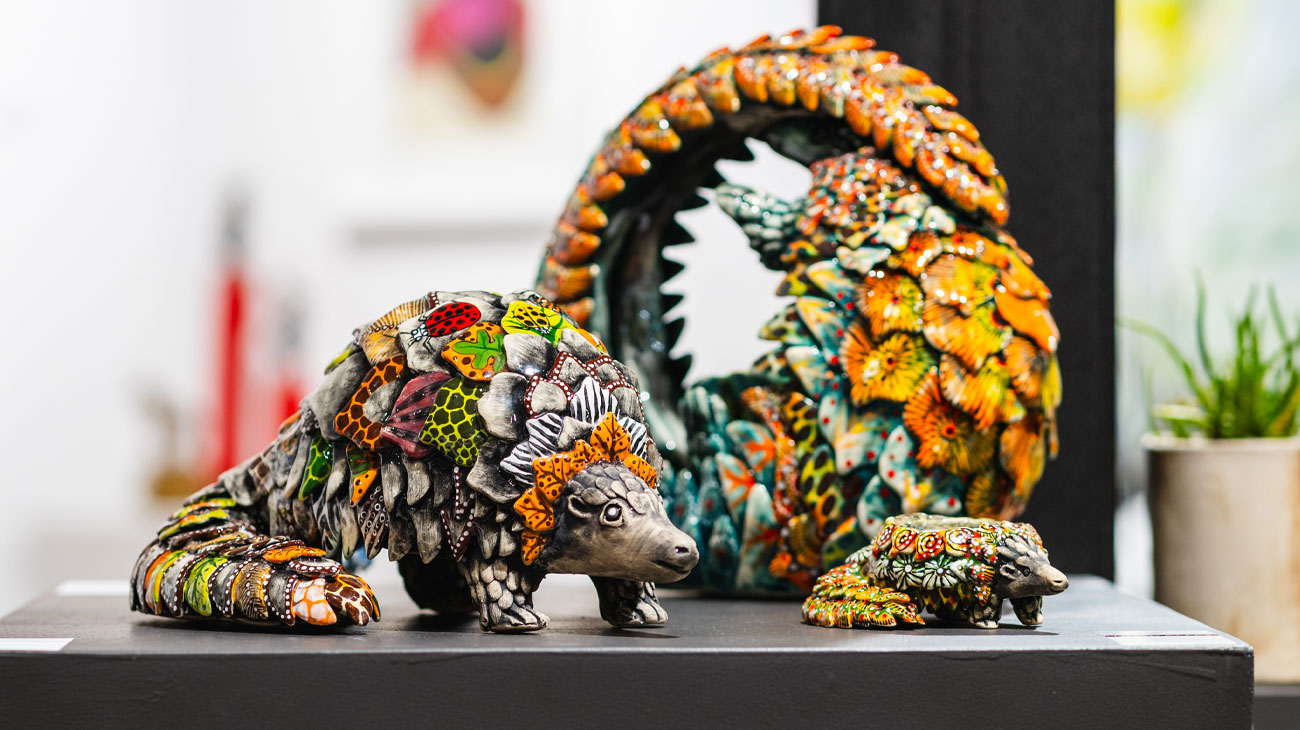
Sharon has been working in pottery for 35 years. Early in her career, while running a business in Pilgrim’s Rest, her work focused on functional kitchenware. But after moving to KZN six and a half years ago to be closer to her children, Sharon shifted her practice to more decorative creations. Today, she works from Salt Rock, running a family business while continuing her passion for clay.
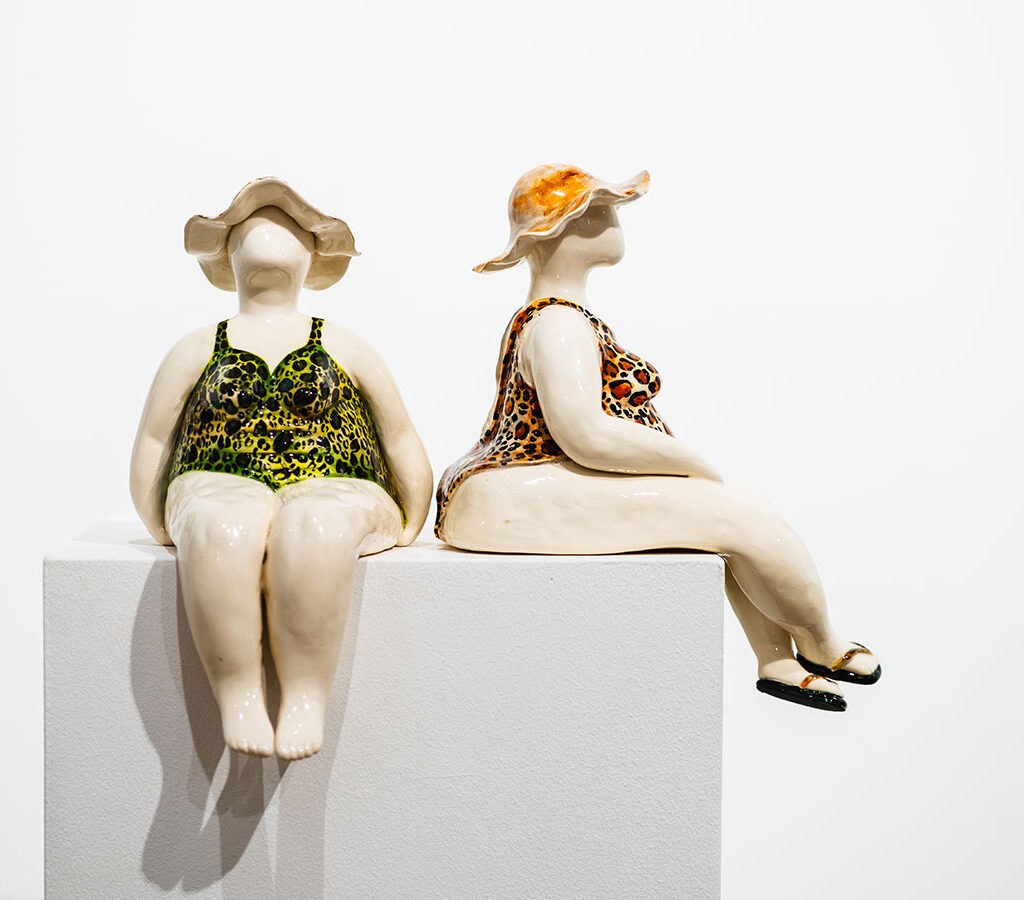
Her decorative pieces include whales and her much-loved “fat ladies,” which she says she identifies with. Recently, she has also become known for her intricate pangolins — pieces that take up to 60 hours to create. Each one is shaped, cut, hollowed, and carefully detailed by hand with individually crafted scales before undergoing the firing process. “When you close that kiln door, you pray to the kiln gods and bless it. Then, only 48 hours later can you open it. It’s like Christmas really — such fun to open a kiln and see what’s happened inside.”

Sharon’s passion for pangolins began during Covid, when time in isolation allowed her to reflect. Researching their plight, she was moved by the cruelty of wildlife trafficking. “They are such gentle creatures, harmless, and essential to the ecosystem. Everything in nature is there for a reason.” Her pangolins are therefore not only art, but also a statement — colourful, tactile, and celebratory. “I love colour. People ask me to make them plain, but to me, they need to be exposed and beautiful.”
Beyond pangolins, Sharon continues to explore new designs and glazes, including raku pieces. She also teaches pottery workshops, nurturing students who have been with her for years. “Pottery is an amazing medium to work with. Some students come and go, but others stay, and it becomes part of their lives.”
Looking ahead, Sharon is building a retreat where pottery will take centre stage, alongside other creative and restorative practices like yoga. “I could do pottery until the day I die. I had a big sign in my shop in Pilgrim’s Rest that read: ‘God put me on this earth to achieve certain things and at this stage I’m so far behind I’ll never die.’ So, you know what? We’ll do pottery until we die!”