
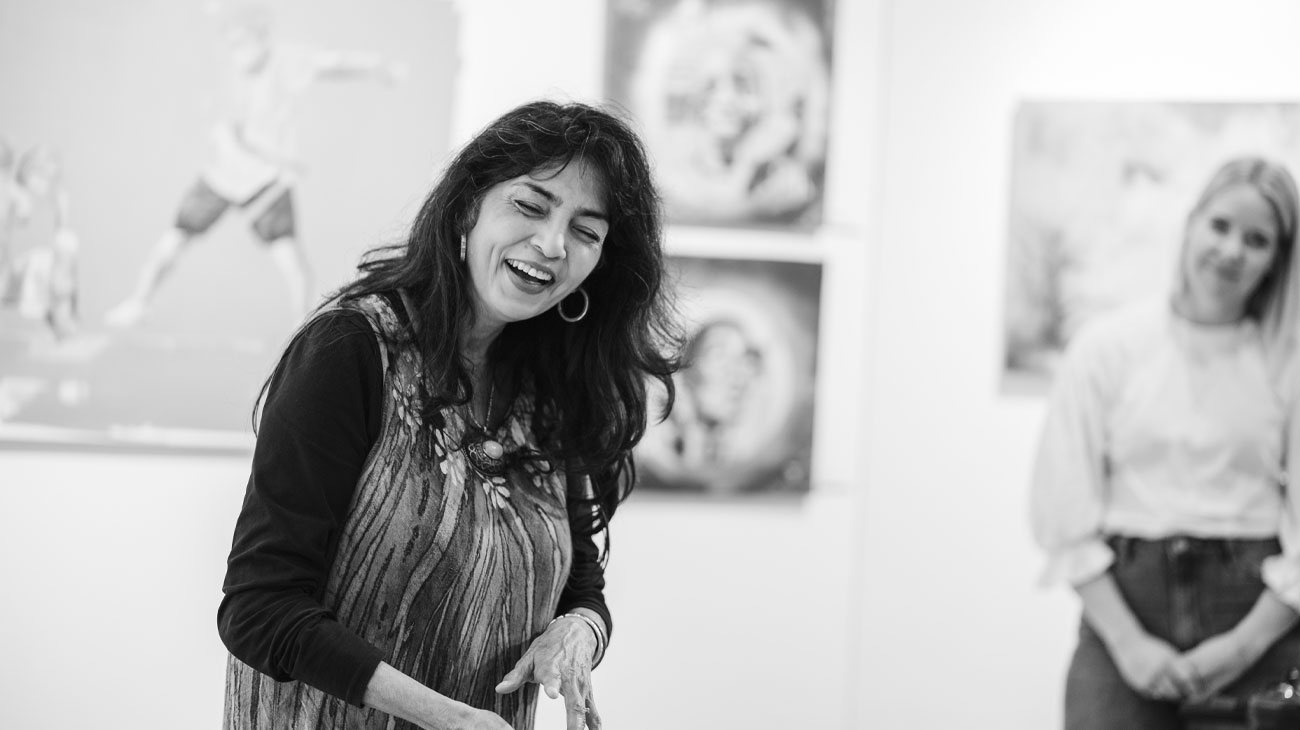
As part of our conversations around Periphery, Suraya Tewary reflected on what it means to create from the margins of conflict. For her, art is a responsibility, a way to highlight the unspoken suffering of women and children caught in war.
“Artists have many roles within society — as observers, as mediators, as educators, and as a source of inspiration.”
For artist Suraya Tewary, this belief lies at the heart of her practice. Her work is a form of responsibility — a commitment to highlighting social injustices, particularly the plight of women and children in conflict zones. “They are the most vulnerable, caught up in war as collateral damage,” she explains. “Right now, with the genocide in Gaza, and wars in Congo, Sudan and Somalia, it is women and children who bear the brunt of situations they never asked for. It’s a side of life, and a side of these horrors, that isn’t spoken about enough.”
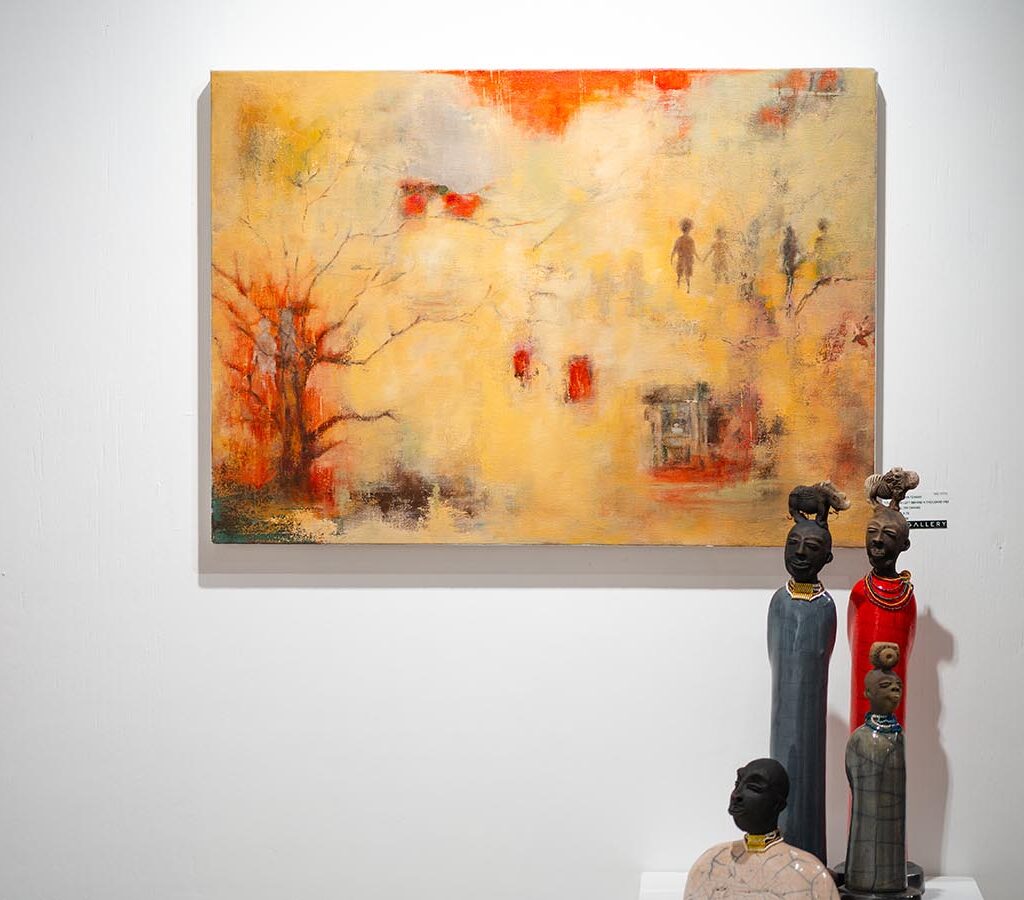
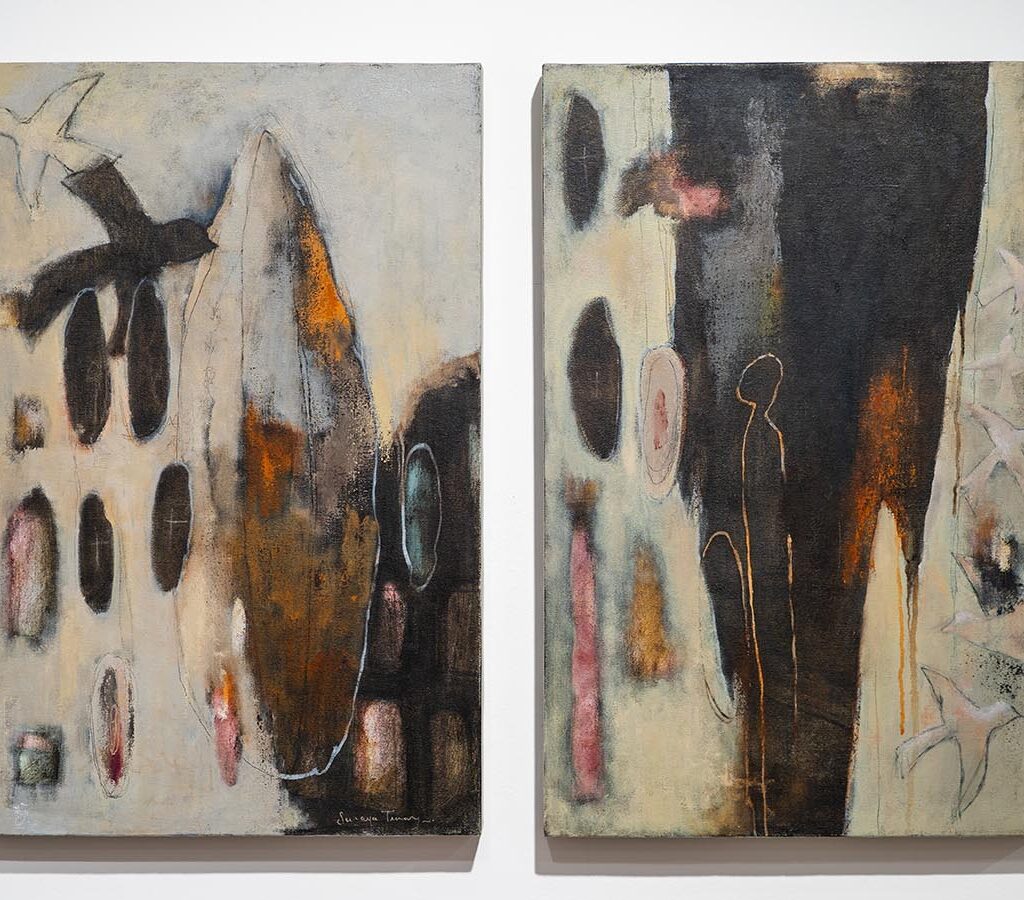
Suraya channels these realities through her layered painting process. Working primarily in oil, she begins each piece with acrylic foundations before building, masking, scraping, and sanding to reveal hidden depths. “I put things down and take them away. I preserve areas that speak to me, then paint over them, sometimes forgetting where those places are until I find them again through touch and texture. That history becomes part of the work.”
Her art, however, doesn’t mirror the violence she speaks of. Instead, Suraya chooses softness, creating space for reflection. “I paint in a way that provokes thought and feeling without confronting viewers with the ugliness. It might seem contradictory, but it’s my way of reconciling what’s happening in the world. I want people to sit with my work, to think, and to become aware — because even awareness is a step towards change.”
Through her work in Periphery, Suraya invites viewers into a quiet yet powerful dialogue: to reflect on conflict, vulnerability, and resilience, and to consider how each of us can make a difference, however small.